Crude Oil Surges Amid Geopolitical Tensions, Gold Plummets
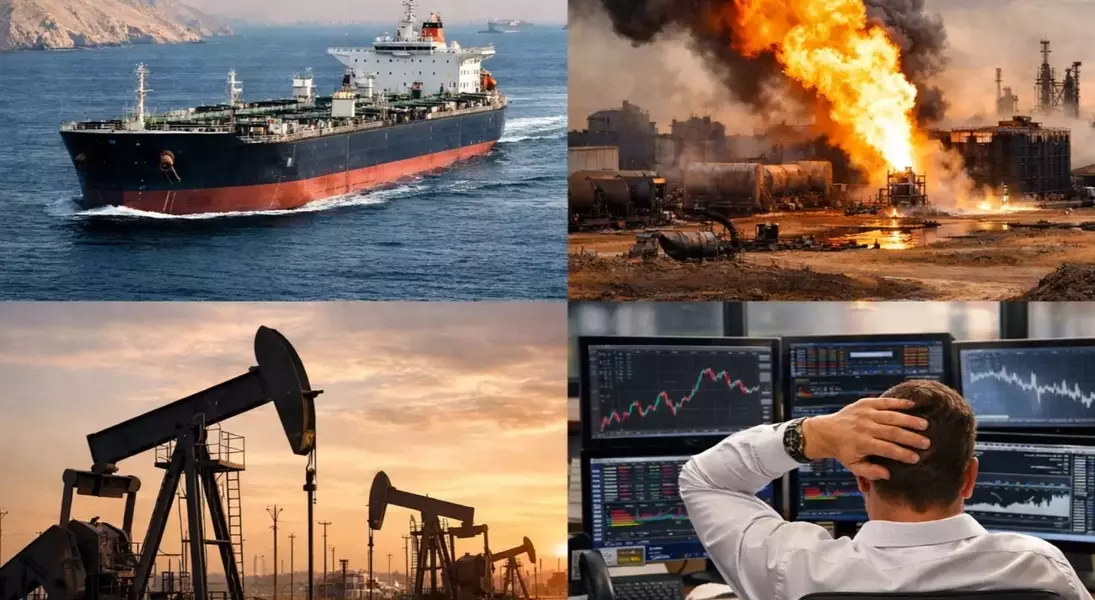
In a volatile turn for commodity markets, crude oil futures recently saw a substantial price increase, achieving its most significant daily rise since late April. The price closed at .14, representing a 9.42% jump, with early trading sessions showing a slight adjustment to .51, still significantly above previous closing figures. This upward movement is primarily driven by mounting geopolitical unrest in key energy-producing regions.
The catalyst for this surge appears to be a series of strategic announcements by the former US President concerning the Strait of Hormuz. These measures, including a 20% transit charge for ships and a blockade targeting Iranian vessels, aim to bolster the US Navy's role in safeguarding commercial shipping and potentially destabilize regional energy flows. Concurrently, reports of military actions near a Saudi Arabian airport have heightened fears of a broader conflict, further impacting energy supply stability. Technically, crude oil prices have pushed beyond the 200-day moving average of .21, reaching an intraday high of .45, just shy of a critical resistance level. Should buyers overcome the .45-.48 resistance area, the next targets are projected at .18 and potentially .00. However, a failure to sustain momentum could lead to a retracement, with support levels around .00 to .10 being crucial.
Conversely, the precious metals market witnessed a sharp downturn, with gold prices falling notably by 8, or 2.86%, to ,002.25. The price briefly dipped below ,000 for the first time since early July, hitting a low of ,986.62 before a minor recovery. From a technical viewpoint, gold's price drop breached key support levels at the June 11 and July 8 lows of ,021.52. This level now acts as a significant resistance. Continued downward pressure could see prices test ,962 and potentially ,942.43. For gold to alleviate immediate selling pressure, reclaiming the ,021.52 mark is essential to improve its short-term technical outlook.
These developments underscore the intricate relationship between global political dynamics and commodity market fluctuations. The current environment, marked by geopolitical tensions and shifting investor sentiments, continues to shape the trajectory of key resources like oil and gold. Investors are keenly watching these events, as they have significant implications for global economic stability and future market trends. The resilience of these markets will largely depend on the evolving geopolitical landscape and the capacity for de-escalation in sensitive regions.