Mercedes' Performance-Reliability Conundrum: Wolff's Stance
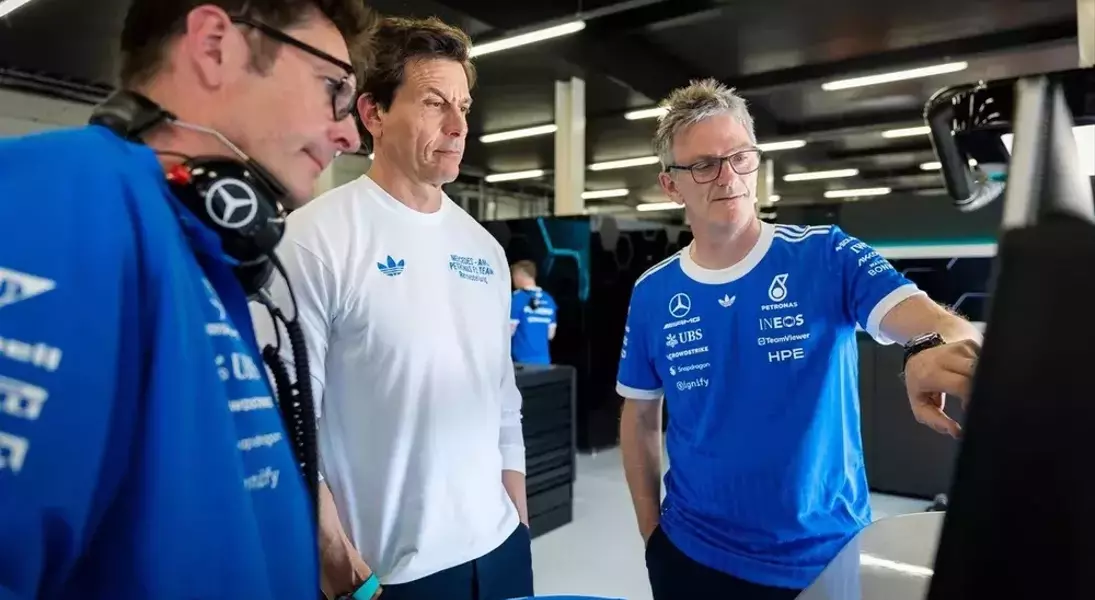
Mercedes Formula 1 team principal, Toto Wolff, acknowledges the recurring reliability issues plaguing his team's otherwise dominant 2026 season. Despite securing pole position in all nine Grand Prix races, Mercedes has only managed to convert seven of these into victories. This disparity highlights a crucial challenge for the team: balancing aggressive performance development with consistent mechanical integrity. Wolff, however, remains steadfast in his philosophy, asserting that a fast car with occasional reliability glitches is preferable to a slower, albeit more dependable, machine. He believes it is a more straightforward task to enhance the reliability of an already high-performing vehicle than to inject speed into one that lacks it. This perspective frames the team's current mechanical setbacks as a natural consequence of pushing the boundaries of automotive engineering, a trade-off he seems willing to make for ultimate competitive edge. The team's track record of covering significant ground, second only to Ferrari, further underscores their car's inherent pace despite the intermittent technical problems.
Mercedes Navigates Performance vs. Reliability in 2026 Formula 1 Season
In the exhilarating 2026 Formula 1 season, the Mercedes-AMG Petronas Formula One Team finds itself in a fascinating predicament: possessing a car of undeniable pace, yet frequently undermined by elusive reliability issues. Team Principal Toto Wolff, a figure known for his strategic acumen, recently articulated his preference for a rapid, high-performing car, even if it occasionally sacrifices reliability, over a slow but robust alternative. This candid admission came amidst a season where Mercedes has impressively claimed all nine pole positions in Grand Prix events, a testament to their engineering prowess and design innovation. However, this commanding starting advantage has only translated into seven Grand Prix victories, hinting at the mechanical frailties that have cost them two potential wins.
A notable instance occurred at the Circuit de Barcelona-Catalunya, where Ferrari’s Lewis Hamilton capitalized on an electrical malfunction that forced Mercedes driver Kimi Antonelli to retire from a promising second position. Merely three weeks prior, at the Canadian Grand Prix, a similar electrical problem led to George Russell's retirement while he was leading the race. More recently, during the British Grand Prix, Antonelli's challenge for victory was curtailed by a broken wheel shield, preventing him from contending with the dominant Charles Leclerc. These incidents underscore a pattern of mechanical inconsistencies that have prevented Mercedes from achieving a perfect score of nine wins from nine races, a statistic Wolff himself was quick to point out as a missed opportunity.
Despite these setbacks, Mercedes has demonstrated remarkable resilience and competitive spirit. Their cars have covered an impressive 5,215km out of a possible 5,408km in Grand Prix races, placing them second only to Ferrari in terms of mileage completed this season. In stark contrast, Aston Martin sits at the bottom of this metric, having completed only 3,753km with just eight official race finishes from eighteen starts, although they have shown some signs of progress since April, particularly with their challenging Honda powertrain.
Wolff's stance reflects a deeply ingrained philosophy within Mercedes: a relentless pursuit of performance. He firmly believes that it is strategically sound to develop a car that is inherently fast and then systematically address its reliability flaws, rather than starting with a conservative design and then struggling to extract more speed. This approach, while leading to occasional frustrations, highlights Mercedes' commitment to innovation and pushing the limits of automotive technology in the highly competitive world of Formula 1.
The ongoing narrative of Mercedes' 2026 season offers a compelling case study in the delicate balance between pushing the boundaries of performance and ensuring consistent reliability in elite motorsport. Toto Wolff's unwavering commitment to speed, even at the cost of some initial mechanical setbacks, reveals a high-stakes strategy aimed at long-term dominance. It forces a contemplation on whether raw pace, coupled with the eventual ironing out of reliability kinks, is indeed the optimal path to championship glory. This approach, while challenging, could potentially yield a more formidable and adaptable racing machine in the future. As fans and competitors alike watch Mercedes tackle these challenges, the team's journey serves as a powerful reminder that even at the pinnacle of engineering, perfection remains an elusive, yet constantly pursued, goal.